
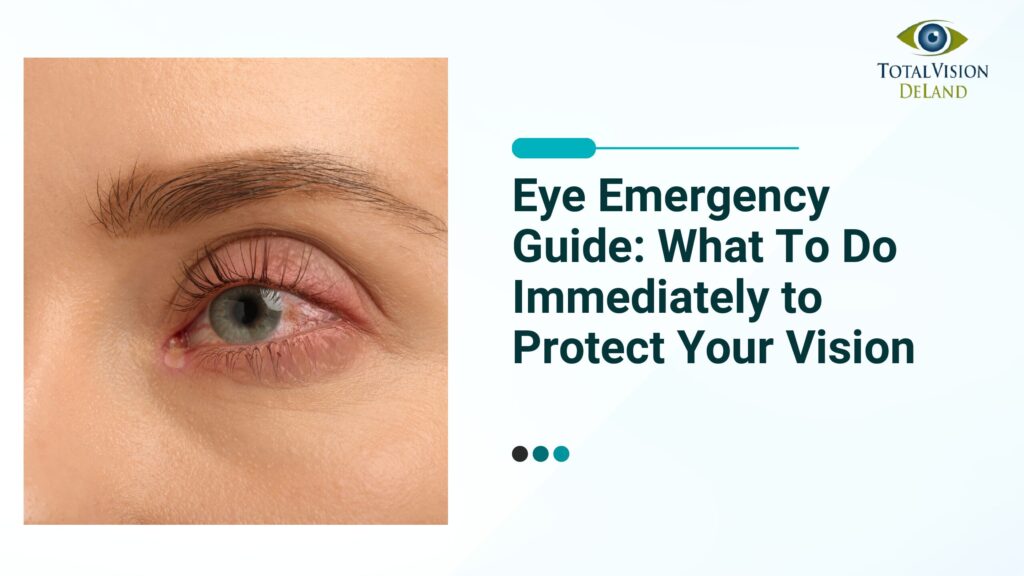
Accidents involving the eyes can happen in seconds — a splash of cleaning solution, a stray piece of debris, a sports injury, or even a sudden change in vision without warning. Because your eyes are extremely delicate, even minor trauma can lead to serious complications if not treated properly. Knowing how to handle an eye emergency can help prevent infection, long-term damage, or permanent vision loss.
Staying calm and taking the right steps immediately is critical. Quick action combined with professional care can make all the difference in protecting your eyesight.
What Is Considered an Eye Emergency?
An eye emergency includes any injury, irritation, or sudden symptom that threatens your vision or causes significant discomfort. While some issues may seem small at first, they can quickly become serious without prompt treatment.
Common eye emergencies include:
Foreign objects like dust, sand, or metal particles
Chemical splashes from household cleaners or chemicals
Cuts or puncture wounds
Blunt trauma from sports or accidents
Sudden flashes, floaters, or vision loss
Severe redness, swelling, or pain
If you are unsure whether something is serious, it’s always safer to treat it as an emergency and seek medical help.
Signs You Should Never Ignore
Your eyes usually signal when something is wrong. Immediate medical care is recommended if you experience:
Sharp or persistent eye pain
Sudden blurry or double vision
Partial or complete vision loss
Bleeding or swelling
Light sensitivity
Something stuck in the eye
Chemical exposure
Severe headache with eye pressure
These symptoms may indicate damage to the cornea, retina, or internal eye structures and require professional evaluation.
How To Handle an Eye Emergency: Step-by-Step
1. Foreign Object in the Eye
If dust or debris gets into your eye, avoid rubbing it. Rubbing can scratch the cornea and worsen irritation. Instead, blink several times and gently rinse with clean water or saline solution. If the object does not come out easily, seek medical attention.
2. Chemical Splash
Chemical burns are extremely serious and require immediate flushing. Hold your eyelids open and rinse with clean, lukewarm water continuously for at least 15–20 minutes. Remove contact lenses if present. After rinsing, visit an eye doctor or emergency care right away.
3. Cuts or Puncture Injuries
Do not wash the eye or try to remove anything embedded. Avoid applying pressure. Lightly cover the eye with a clean shield or cloth and go to the emergency room immediately.
4. Blunt Trauma or Hit to the Eye
Apply a cold compress gently around the eye to reduce swelling, but do not press directly on the eyeball. If you notice vision changes, bruising, or ongoing pain, consult an eye specialist promptly.
5. Sudden Vision Changes
Flashes of light, floating spots, or sudden vision loss may signal retinal problems. These symptoms should be treated as urgent. Contact an eye doctor immediately, as early treatment can prevent permanent damage.
What NOT To Do During an Eye Emergency
Many people accidentally make injuries worse by trying home remedies. Avoid these mistakes:
Don’t rub or press your eye
Don’t attempt to remove sharp or embedded objects
Don’t use tools or tweezers
Don’t apply medications without medical advice
Don’t delay treatment
When it comes to your vision, waiting too long can lead to complications that are harder to treat.
Tips to Prevent Eye Emergencies
Prevention is always better than treatment. A few simple precautions can protect your eyes in daily life:
Wear protective eyewear when working with tools or chemicals
Use sports goggles during physical activities
Handle cleaning products carefully
Follow proper contact lens hygiene
Take breaks from screens to reduce eye fatigue
Schedule routine eye exams
Being proactive about eye safety can significantly reduce the risk of injuries.
When to See an Eye Care Professional
If symptoms last more than a few hours or worsen over time, professional evaluation is essential. Even minor discomfort can hide deeper issues. Early diagnosis allows faster recovery and helps protect long-term vision health.
Conclusion
Eye emergencies can be stressful, but knowing how to handle an eye emergency empowers you to respond quickly and safely. Whether it’s flushing out chemicals, protecting your eye from further injury, or seeking urgent care, immediate action can save your sight. Never ignore persistent pain or sudden vision changes — your eyes deserve prompt attention.
For trusted, comprehensive eye care and urgent evaluations, visit Total Vision Of Deland – Best Optometrist Clinic in Deland Florida, where experienced professionals are dedicated to protecting your vision when it matters most.